
The Mac's Lost Classics: Celebrating Snakes Alive!, the Greatest Snake Game Ever Made
The Apple Macintosh, in those bygone ages of the 1980s, isn’t fondly remembered as a gaming machine. Often snubbed by the bigger companies, it was the homebrew guru who filled the void on those early machines. And one dude, a certain Thomas Schulze, created what perhaps is the greatest Snake Game ever conceived.
D
2/15/20268 min read
In my last blog, I reminisced about my childhood Macintosh, a squat, monochrome machine that contained a tiny 9” screen and a skeletal library of computer games. And yet, I admired that cute and easy-to-use device and its weird slew of largely homebrew software. For context: In the mid ‘80s, DOS users enjoyed a wide swath of games: King’s Quest, Police Quest, Leisure Suit Larry, Karateka, Sid Meier’s Pirates!, plus countless smaller, more indie/shareware-style titles. Not only were most of these games backed by big studios with big budgets, they also sported the color those early Macs tragically lacked. (Apple definitely had PC-users licked in the sound department, though).
Those counter-cultural owners of the PC’s most prominent rival—Apple’s early Macintosh line of computers—often had to settle for a very different kind of game and/or experience. YouTuber Classic Mac Gaming demonstrates as much in his 2023 video; while DOS gamers had Pirates!, Mac owners got Lunar Phantom, Star ‘Roids, and The Adventures of Sean. These latter titles were certainly good for what they were, but could hardly compare to the more seasoned, corporate output DOS gamers took for granted. Even when a game was eventually ported over—like Pirates! in 1988—it just wasn’t the same due to the Mac’s high-res but still black-and-white display.
During this era, and being a poor kid at that, my main gaming exposure with Apple’s little underdog of a machine lied more with the likes of the one-man studio or tiny upstart team. While PC gamers got Sierra On-line’s pedigree of seminal product, I got Glypha, Glider, Stunt Copter, and the surprisingly deep (if graphically sparse) The Dungeon of Doom. While early DOS gamers wax nostalgic over Commander Keen or Ultima, I get wistful over games like Mac-Man (which I reviewed in my last blog). It’s like a lost, alternate history known only to me.
Eventually, as Apple upgraded its Macintosh line with color displays and faster processors, gaming got a little better for the average Mac acolyte ravenous for more content. And noting the advantages of the new machines, even my frugal parents finally retired our beige and aging Mac for the much sleeker Performa 630. It used a 68040 processor (versus the original’s 68000) and sported a high-res color monitor, making it the ultimate upgrade for a boy who was now in his teens (and otherwise accustomed to the perks of his Super Nintendo).
Funny enough, however, I rarely took advantage of that greater horsepower. Although better (or, at least, more sophisticated) games were now available, I saved my money for all the SNES and Game Boy titles pouring forth at the time, sparing only the random twenty here or there for something Apple-related. Indeed, my Performa experience largely meant hopping onto America On-line and downloading its trove of readily available freeware. Apple fanatics might remember the prominent Marathon series or the highly-ported Lemmings, but my halcyon Macintosh days were spent playing Patriot Command, Asterix, Maelstrom, and what probably is my favorite…
…Snakes Alive!
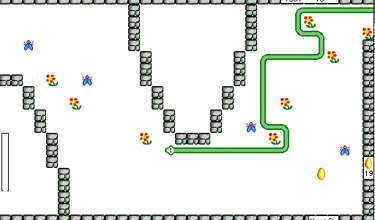
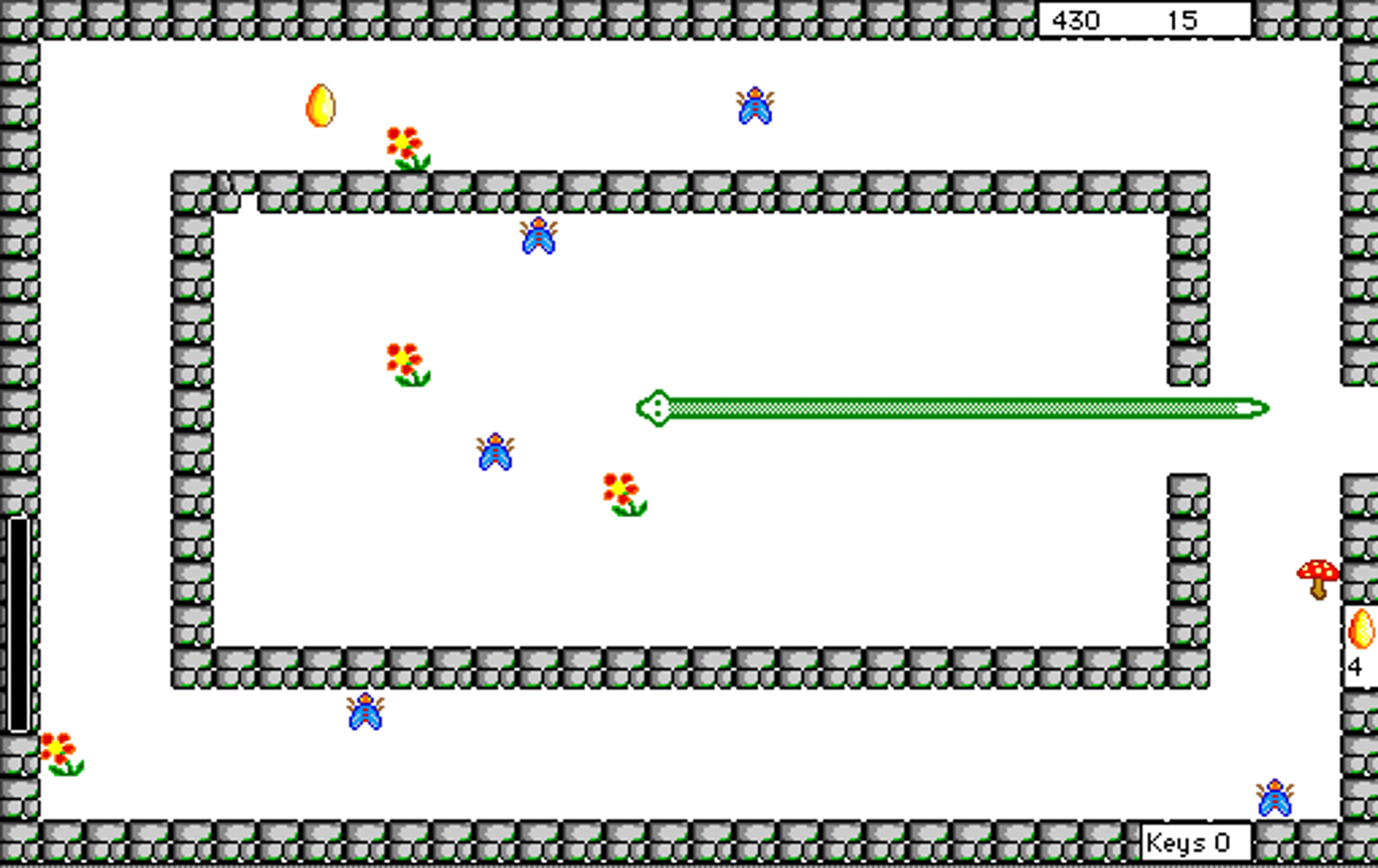
Snakes Alive! is the greatest Snake Game nobody played. Trapped on the Mac...it's yet another title lost to the ages.
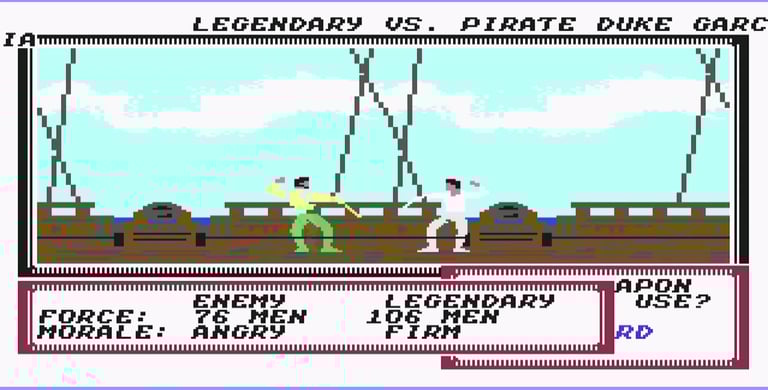
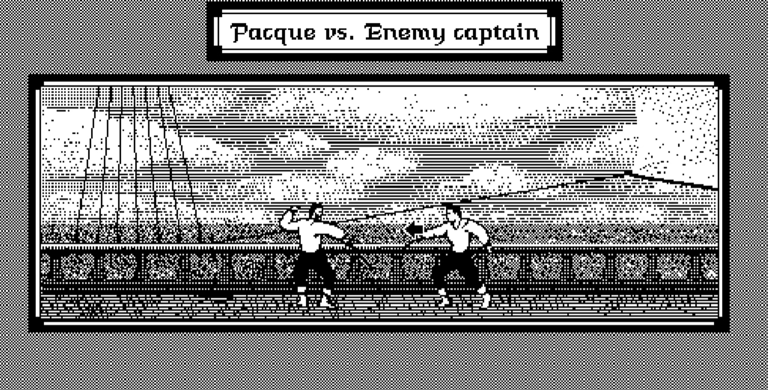
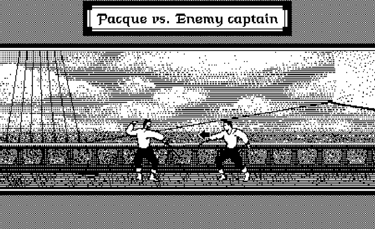
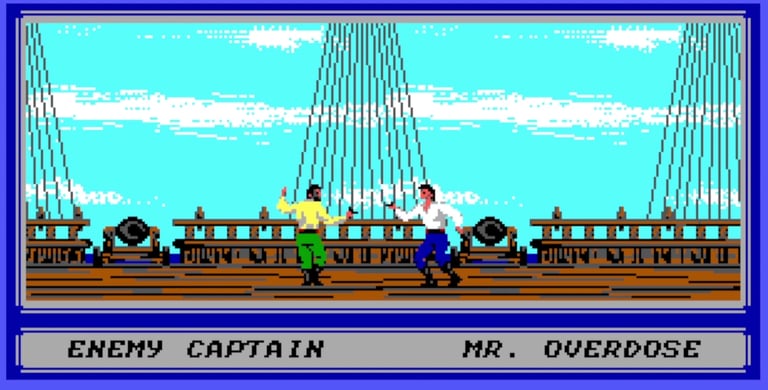
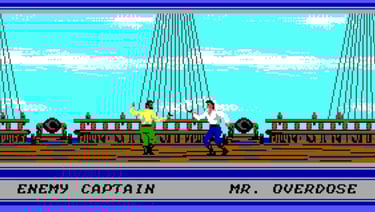
The upper two pics are of the Commodore 64 and PC (DOS) versions of Pirates!, respectively. The bottom is the Mac version. Whichever version "looks" the best, the color is sorely missed on Apple's edition.
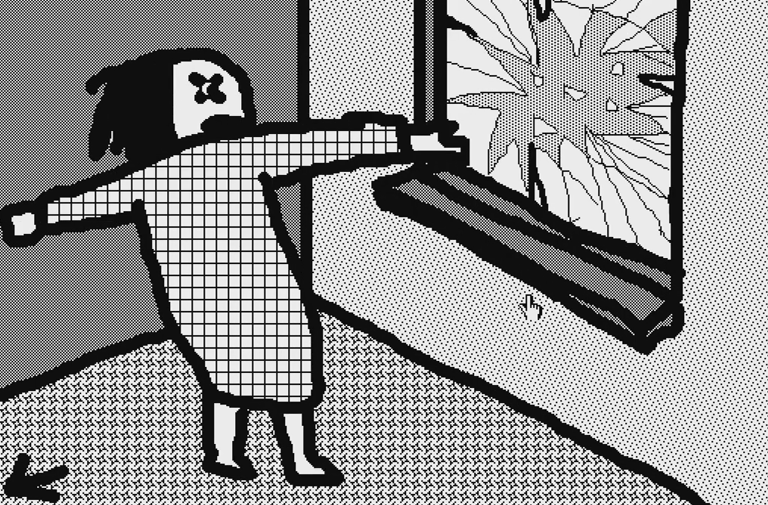
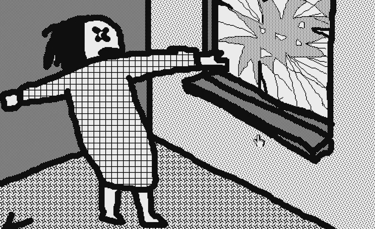
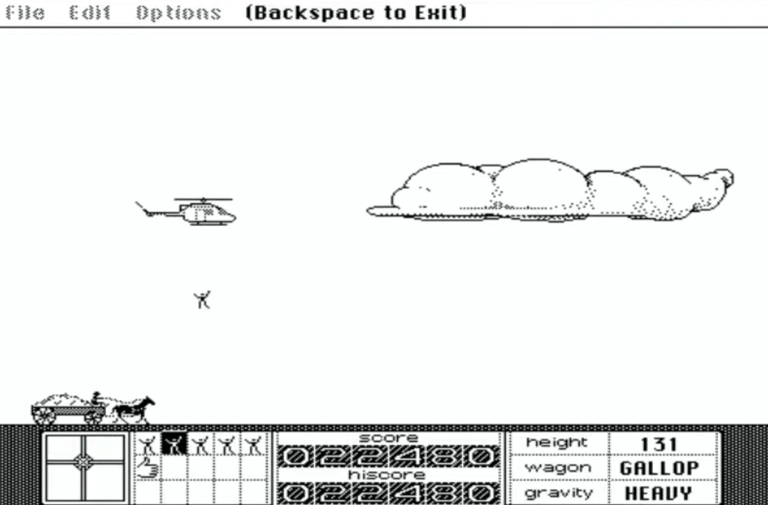
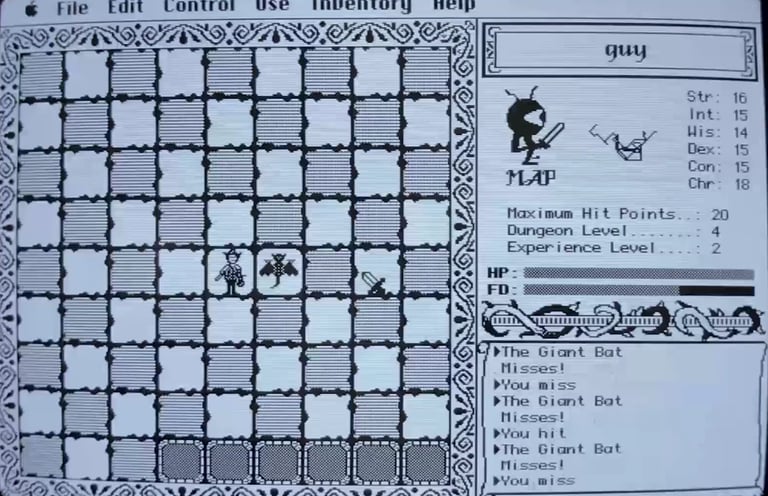
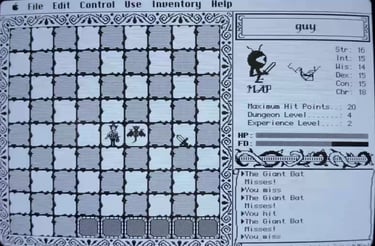
The Adventures of Sean, Stunt Copter, and The Dungeon of Doom were among what the typical late '80s Mac user played.
Like Mac-Man, Snakes Alive! hearkens back to a different time when games could still be quick diversions and fast distractions—fun novelties to play in-between school assignments or tasks in the office. When games could be competitive on a local level between siblings. When earning points was, well, the whole point of the experience.
And, as many would expect, Snakes Alive! derives itself from the classic game of “Snake,” itself a generic name and concept that derives from various titles of a snake/worm/light cycle theme in which the player’s “character” continually grows longer and longer as it moves about the screen. Colliding into oneself brings death…an inevitability that soon becomes harder and harder to avoid. Games like 1976’s Blockade, 1982’s Tron, and 1982’s Nibbler are all differing extensions of this basic concept.
Most, however, probably know Snake from the Nokia 6110 cell phone, an ancient device by today’s standards that included a green-screen “Snake” as a freebie time waster. This version went on to receive several iterations/revamps itself as Nokia continued to improve its phones. Years later still, Google eventually made snake into a playable Google Doodle, and more recently, the retro-themed collection UFO 50 expanded on the Snake idea with Magic Garden, a title in which a girl is trailed by a line of obnoxious slimes.
But none of these top Snakes Alive!, a humble piece of shareware that might just be the greatest Snake game of all time.
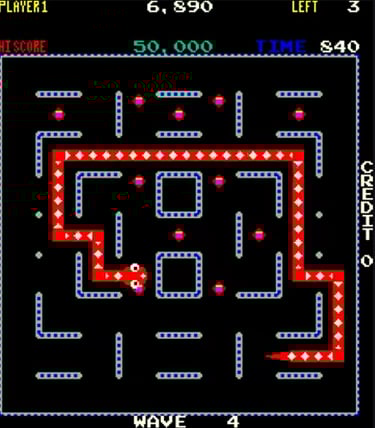
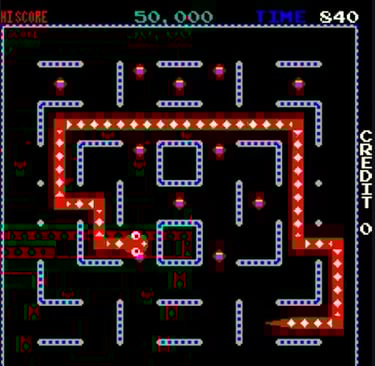
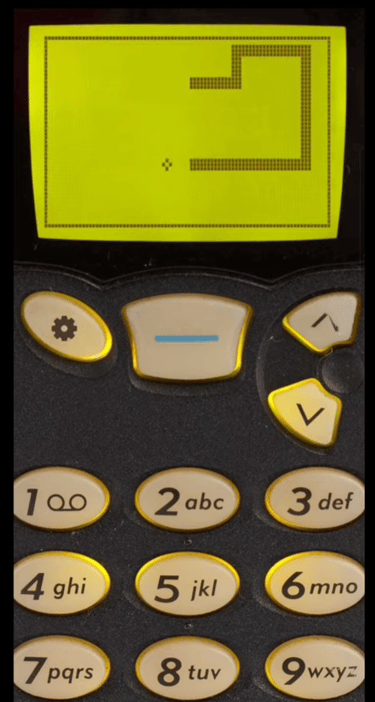
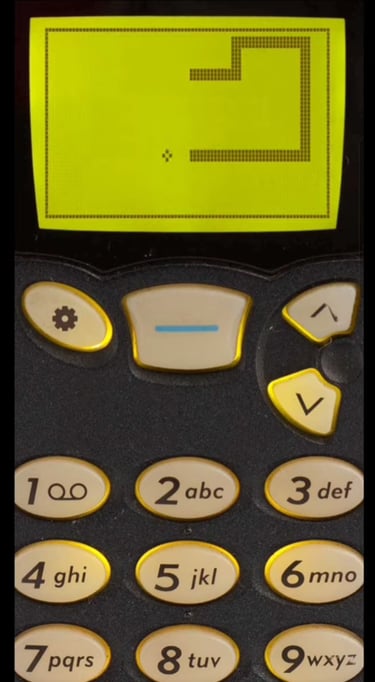


Nibbler, the Nokia 6110's Snake, and Google's "Doodle" of the snake idea.
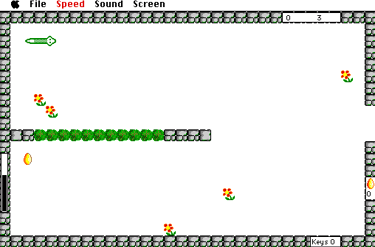
Most Snake games retain the gameplay to a single grid: move the wiry creature around a boxy landscape, eating and growing while avoiding what’s usually the only “enemy”—the character’s tail. It’s a simple and addictive premise great for passing a few idle minutes. What it’s not, however, is anything deep or particularly substantial.
Snakes Alive! changes that. More than confined to a square, Mr. Snake can now venture out into what’s essentially a series of interconnecting screens. An overworld, so to speak. Different kinds of obstacles, foodstuffs, and items are everywhere. And most importantly, there’s now something resembling a goal beyond capturing a high score. This time, indeed, there’s an end…an escape from the right-angled prison that has kept the snake so unwillingly caged.
It’s a quest, essentially—one of collecting 60 eggs across a frame-by-frame grid not unlike the original The Legend of Zelda’s. Collecting these eggs not only requires maneuvering through cramped passages and absurdly narrow corridors, but also collecting obscurely placed keys to unlock even more obscurely hidden doors. It’s a constant, unending slither to a hidden ending that, I hate to admit, I never quite reached.
Beyond the “open-ended” gameplay, however, exists the game’s most interesting and, really, forgiving twist. Later “rooms,” with all their increasingly crowded, dangerous spaces, really begin to put the squeeze on the player. Navigating these tangled pathways without error becomes, more than unreasonably tricky, all but impractical.
It's here the game reveals its most twisted but forgiving feature, a paradoxically life-ending, life-saving form of cannibalism. Should the player’s snake intersect with himself, he’ll take damage (as indicated by a lifebar) but won’t necessarily perish so long as he swiftly gulps up the severed remains of his now dismembered body. It’s bizarre, weird, funny, and all but necessary for any would-be serpentine adventurer intent on surviving the labyrinth's later chambers.
Snakes Alive!, like so many Macintosh games of the indie/homebrew/shareware variety, is a golden relic lost to the digital tombs of a very different time and clime. Those who stumbled upon it in the ‘90s unquestionably loved it…but as the Internet formed and blossomed (and, in many ways, eventually rotted), the “Snake” concept would be regurgitated again and again, leaving poor Snakes Alive! and its creator, Thomas Schulze, a forgotten footnote from an already hazy age. The irony is that, despite the many versions of Snake that has since risen, none capture the simple but ambitious brilliance that made—nay, makes—Snakes Alive! so undeniably brilliant.
Today, emulating the game can be a bit of a chore, but for the curious, a fully-emulated version is available on Archive.org through the browser. It’s a bit buggy—keep the game playing on the “normal” window size setting and set the player speed to about 4 or 5—but the game still plays well enough to demonstrate why, once upon a time, it was seen as so addictive. There’s a reason the storied gaming magazine Next Generation once featured it in its pages. There are better games, even better classic games, but there really isn’t a better game of Snake.
Thanks, Mr. Schulze, for the memories.--D
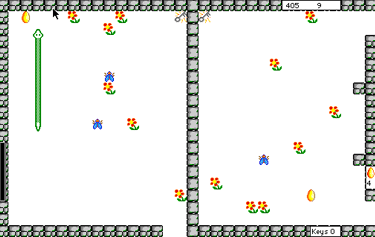
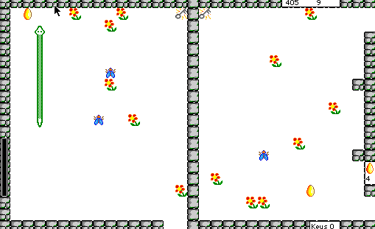
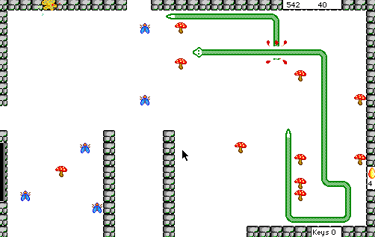
Mr. Snake begins no longer than a worm, collecting eggs and keys to eventually reach the exit of this endless-slither of a nightmare.
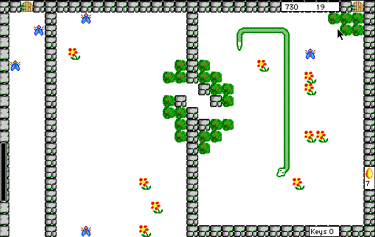
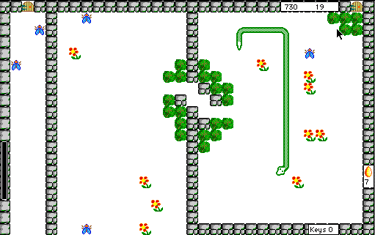
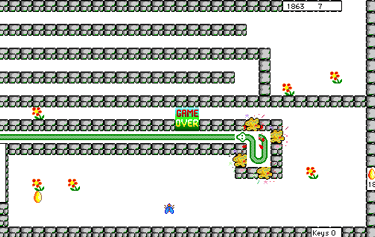
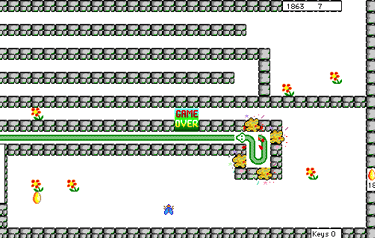
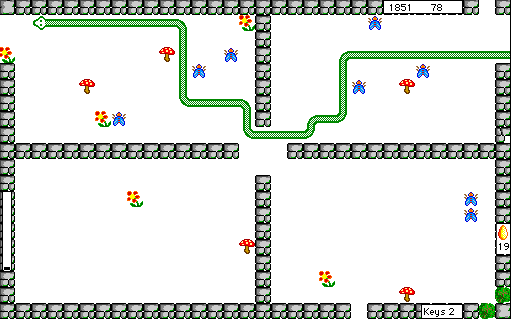
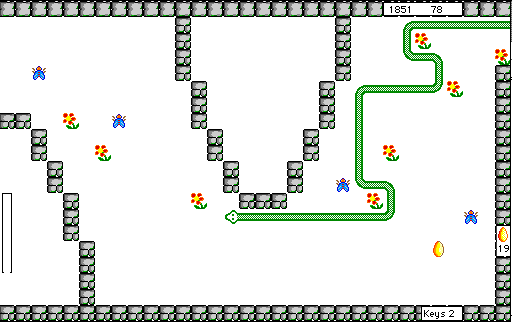
As Mr. Snake grows longer, his world grows in complexity...to the point of unfairness in a couple of cases.
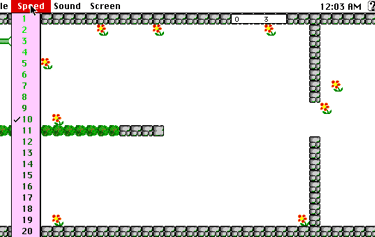
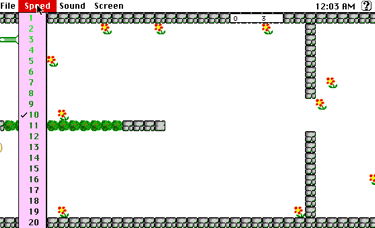
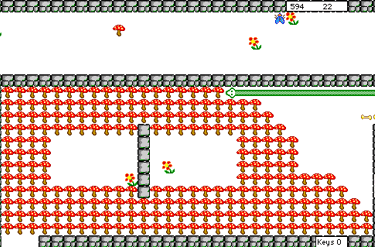
Snakes Alive! allows the player to adjust the speed, from absurdly slow to impossibly fast. For me, the sweet spot is around 4 or 5.
Oh oh! Mr. Snake has severed himself...but all is not lost (beyond his disconnected tail). Although bumping into oneself is often lethal, enterprising players can begin immediately chomping on Mr. Snake's remains to keep him chugging. It's not cannibalism, after all, if it's the person's own body. Right?
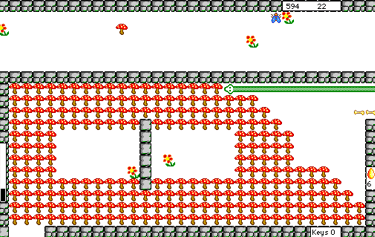
Areas get increasingly tricky, with rooms that sometimes can't be surpassed without a lot of forethought. Here, these poisonous mushrooms will quickly drain the snake's health bar to a sure demise if the player hasn't already spent time building it up (by eating) in other rooms.


Thomas Schulze, author of Snakes Alive, circa 1991. Thanks for the memories, friend! (Is it too late to send you that postcard?)
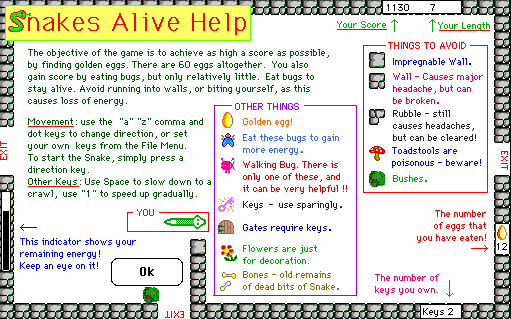
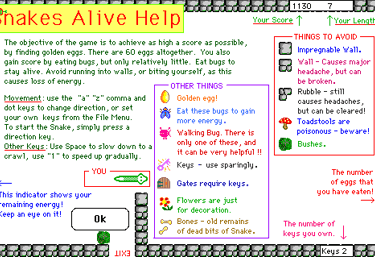
Snakes Alive! included a neat little help guide. Easy to read and pretty to see.
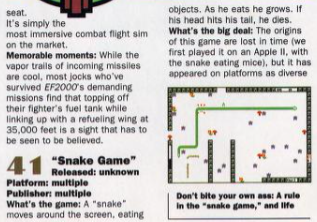
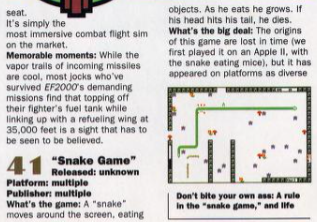
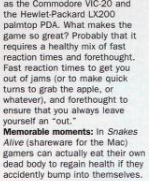
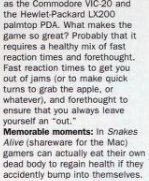
Next Generation Magazine featured the "Snake Game" as number 41 on its Top 100 Games of All Time list. Thomas Schulze's version earned the picture. Congrats, sir!
Contact: lostnostalgiaproductions@gmail.com
Website: www.lostnostalgia.com
Like what we're doing? Please consider throwing us a dollar into our Patreon page's tip jar!